What we do
URWAN is a project that operates across the Mediterranean, combining participatory co-design with nature-based solutions to reimagine public spaces and urban water management. Using the Start Park methodology, local communities in Cuba (Portugal), Ptuj (Slovenia), Sarajevo (Bosnia and Herzegovina), Rome and Ferla (Italy) took part in facilitated co-design processes to shape shared masterplans for their neighbourhoods. Meanwhile, dedicated NbS investments were designed for Cuba, Rome and Larnaka (Cyprus), with interventions in Cuba and Rome being fully realised. In addition, an Integrated Decision Support System (IDSS) was used to support local authorities in Ferla, Ptuj and Sarajevo to identify and compare different intervention scenarios.


Cuba
INVESTMENT
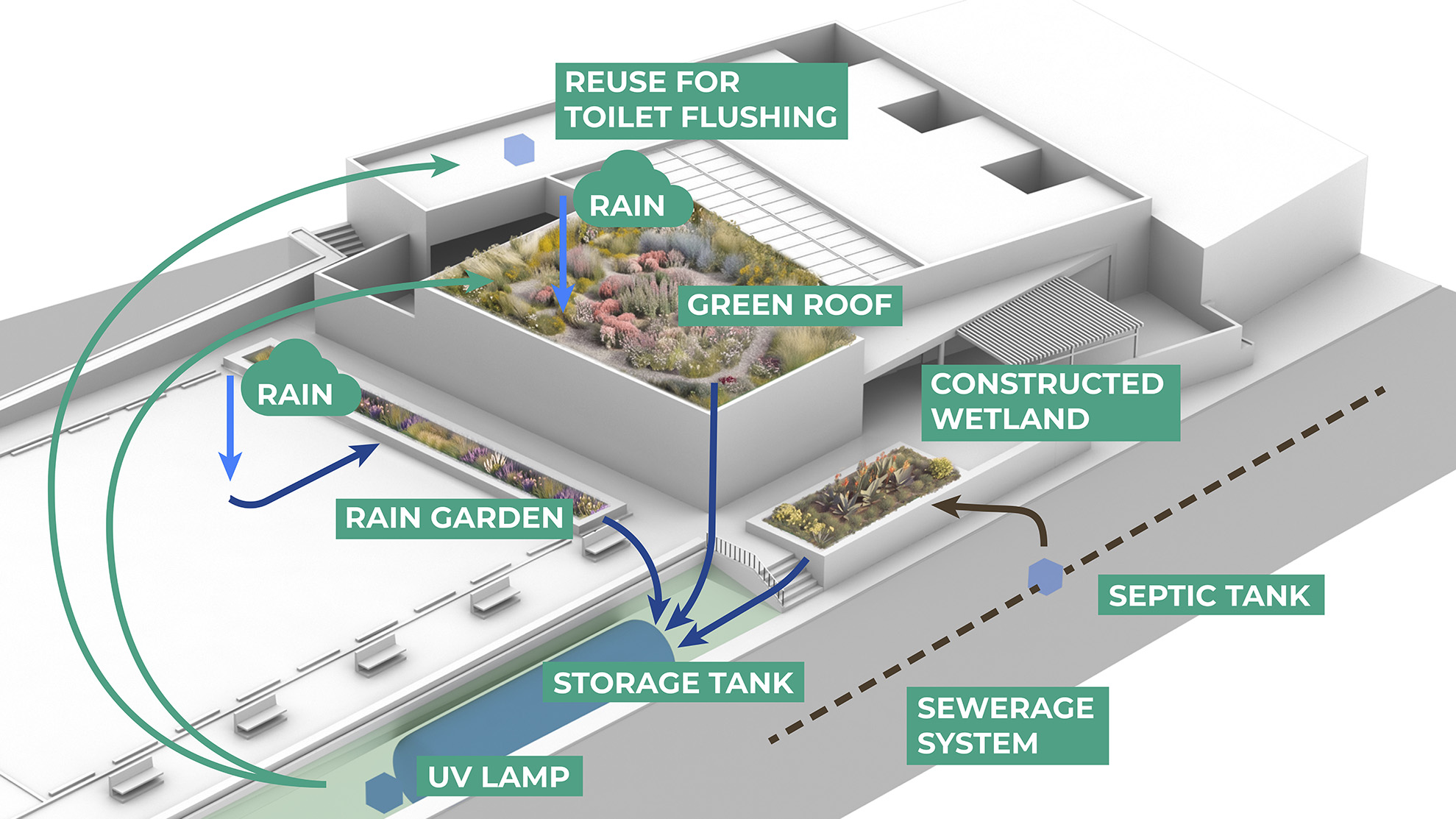
In Cuba, the investment showcases an integrated Nature-based Solutions system for sustainable urban water management. A constructed wetland, rain garden and green roof work together with a shaded pergola to capture, treat and reuse rainwater and greywater, cutting potable water demand for irrigation and sanitation. At its core, a sewer mining process diverts and treats wastewater on-site through a constructed wetland, in full compliance with EU Regulation 2020/741 on minimum requirements for water reuse — turning a waste stream into a safe, local water resource. The green infrastructure also cools the microclimate, boosts biodiversity, and creates a more liveable, climate-resilient public space. Watch the video
START PARK IMPLEMENTATION

Following the Start Park methodology, in Cuba, a facilitated participatory design of the school courtyard was carried out by local facilitators trained and guided by the URWAN team. Through facilitated events involving 293 participants, the process led to a shared masterplan for the space, complemented by a technical-economic pre-feasibility study developed with the support of technical partners. Discover more in the Start Park activity portfolio.
Ferla
DIGITAL TWIN

For the Municipality of Ferla was implemented a complete Digital Twin of the urban area by integrating territorial surveys, GIS layers, cadastral information, environmental datasets, and climaterelated indicators.
The model was used to assess the current resilience level of the municipality and to simulate alternative adaptation strategies under different climate scenarios. Through the integrated resilience calculation engine, each scenario can be quantitatively compared, supporting evidence-based decision making.
A dedicated Web Viewer was also produced for Ferla, providing local stakeholders with an accessible platform to explore the Digital Twin, visualise resilience maps, and compare future intervention scenarios. Watch the video.
START PARK IMPLEMENTATION

Following the Start Park methodology, in Ferla, a facilitated participatory design of a square near the local school was carried out by local facilitators trained and guided by the URWAN team. Through facilitated events involving 250 local residents and students, the process led to a shared masterplan for the space, complemented by a technical-economic pre-feasibility study developed with the support of technical partners. Discover more in the Start Park activity portfolio.
Larnaka
INVESTMENT
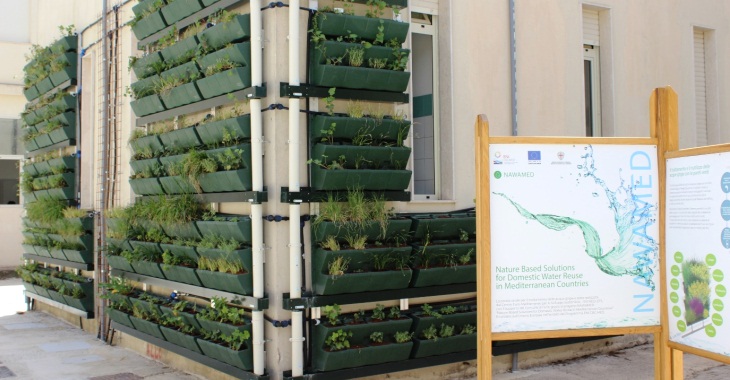
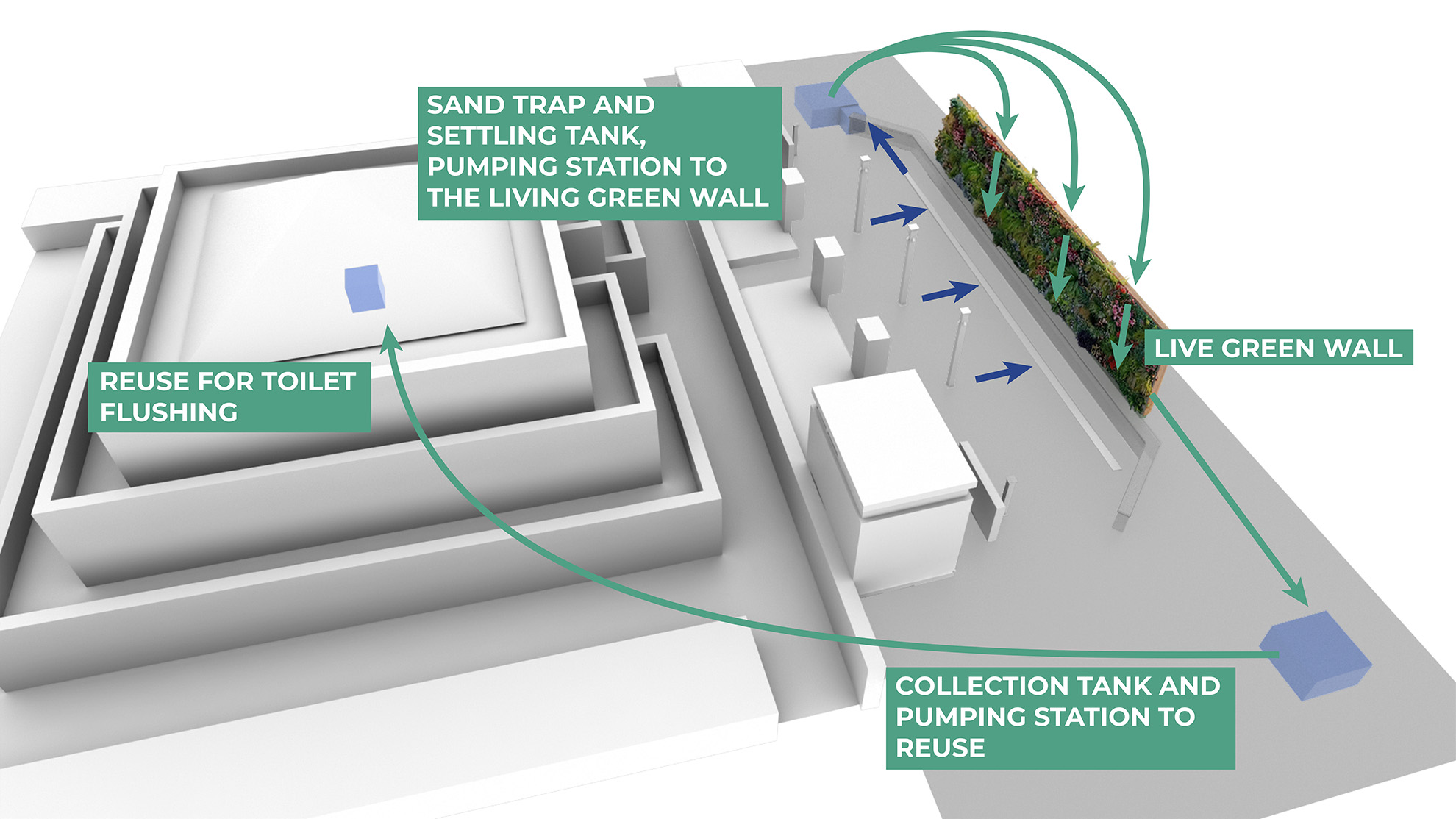
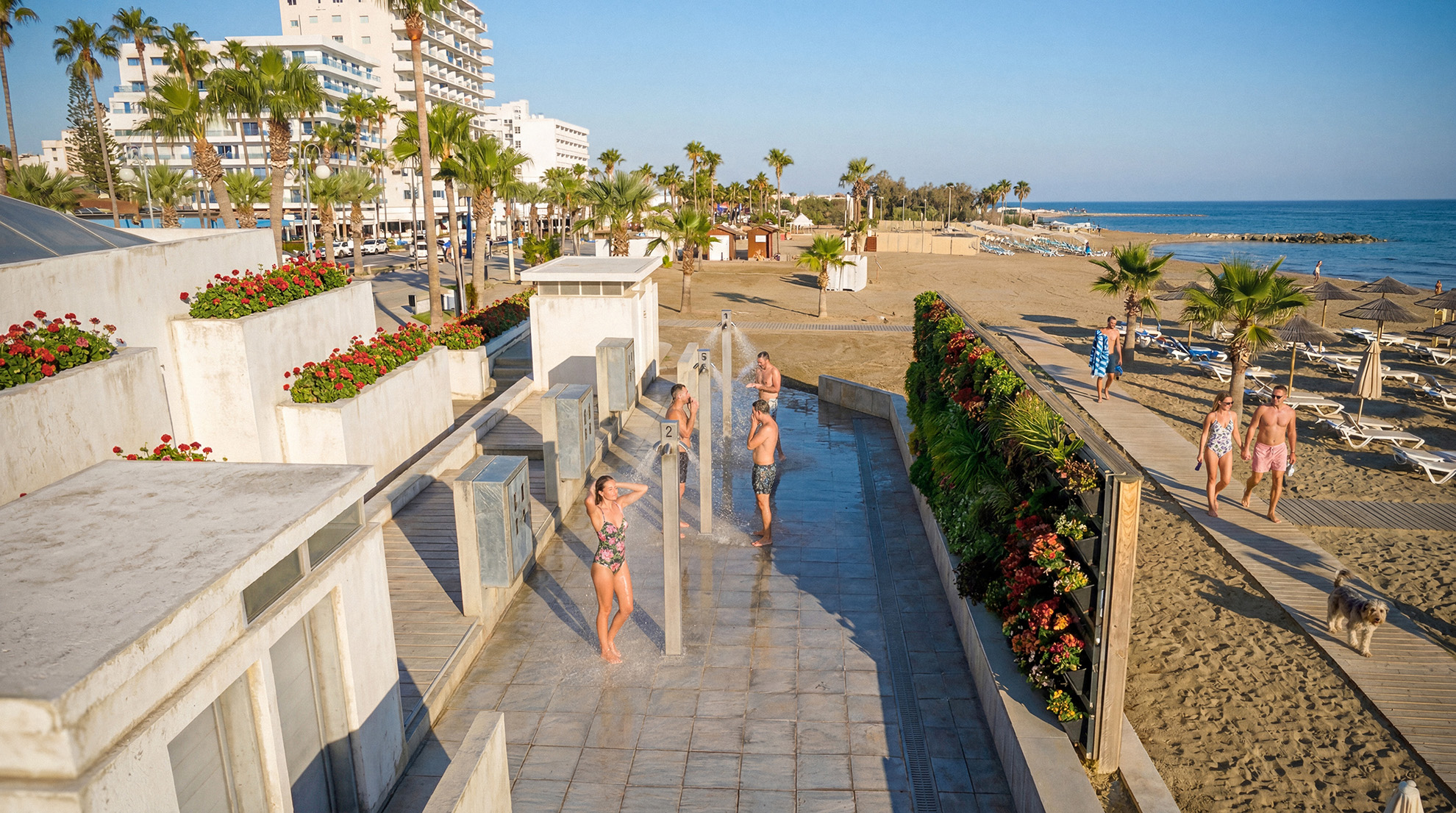
In Larnaka, the URWAN project designed Nature-based Solutions for two beach facilities, based on vertical greening — green façades and anchored vertical garden modules — to treat greywater collected from the facilities’ showers and hand basins on-site. Treated water was reused internally for WC flushing. The two interventions aimed to demonstrate decentralised water reuse and support Larnaka’s response to drought and growing water scarcity. While the pilots were not physically implemented, remaining at the design stage, they stand as a replicable model for water-conscious urban regeneration in water-stressed Mediterranean cities. Watch the video
Ptuj
DIGITAL TWIN

For Ptuj was developed a comprehensive Digital Twin of the study area by integrating GIS data, topographic information, urban datasets, and environmental information into a unified threedimensional model. The Digital Twin was connected to the Kassandra resilience engine, enabling the calculation of the baseline resilience status of the city and the simulation of multiple climate adaptation scenarios. The implemented methodology allows planners to compare alternative interventions and evaluate their contribution to urban resilience through the Kassandra Resilience Index.
To facilitate the dissemination of results among project partners and public authorities, a dedicated Web Viewer was developed. The viewer enables users to navigate the three-dimensional model, inspect urban assets, compare adaptation scenarios, and visualise resilience indicators through an intuitive web interface. Watch the video.
START PARK IMPLEMENTATION
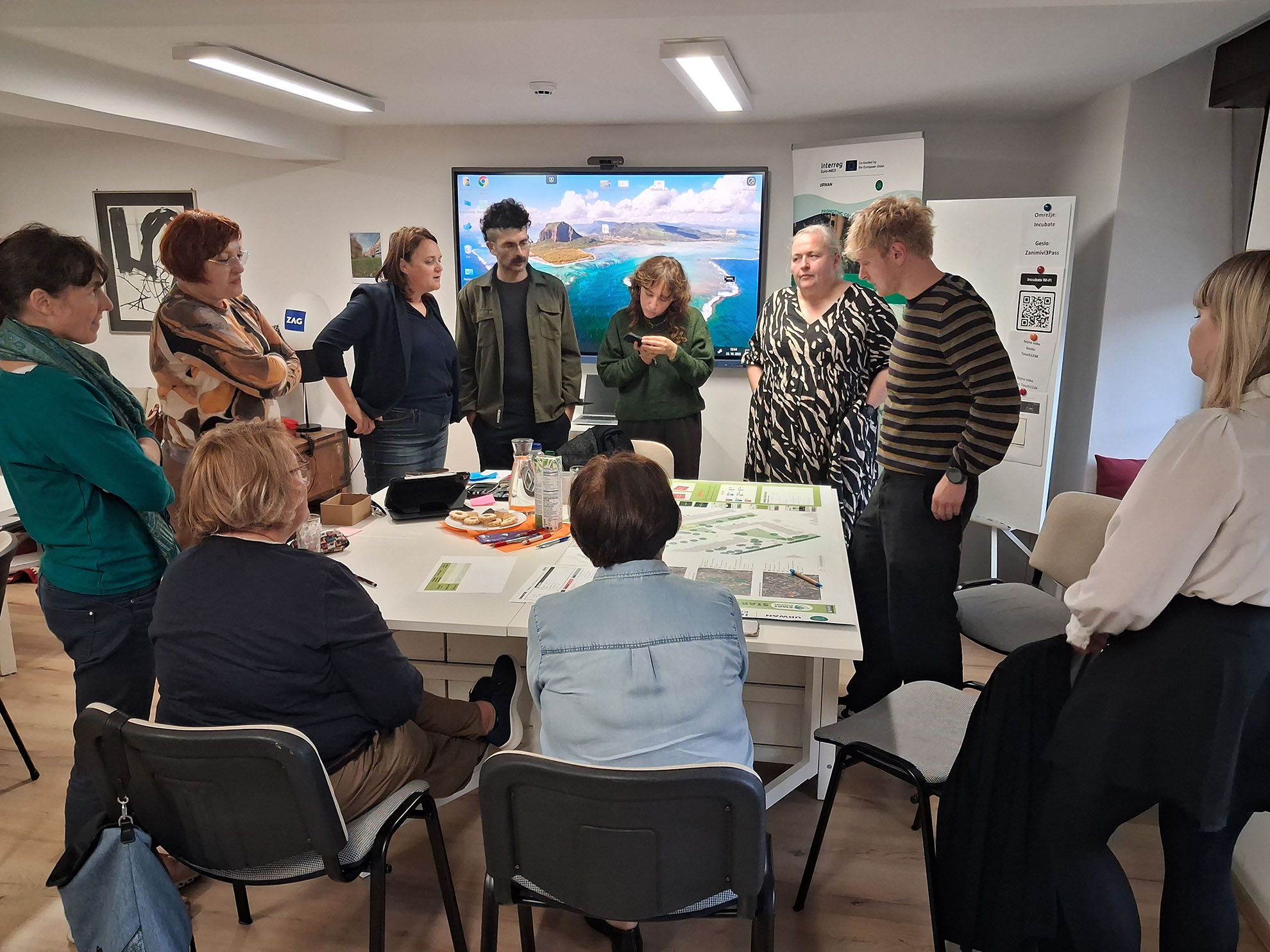
Following the Start Park methodology, in Ptuj, a facilitated participatory design of a public space between residential buildings was carried out by local facilitators trained and guided by the URWAN team. Through facilitated events involving 116 participants, the process led to a shared masterplan for the space, complemented by a technical-economic pre-feasibility study developed with the support of technical partners. Discover more in the Start Park activity portfolio.
Rome
INVESTMENT
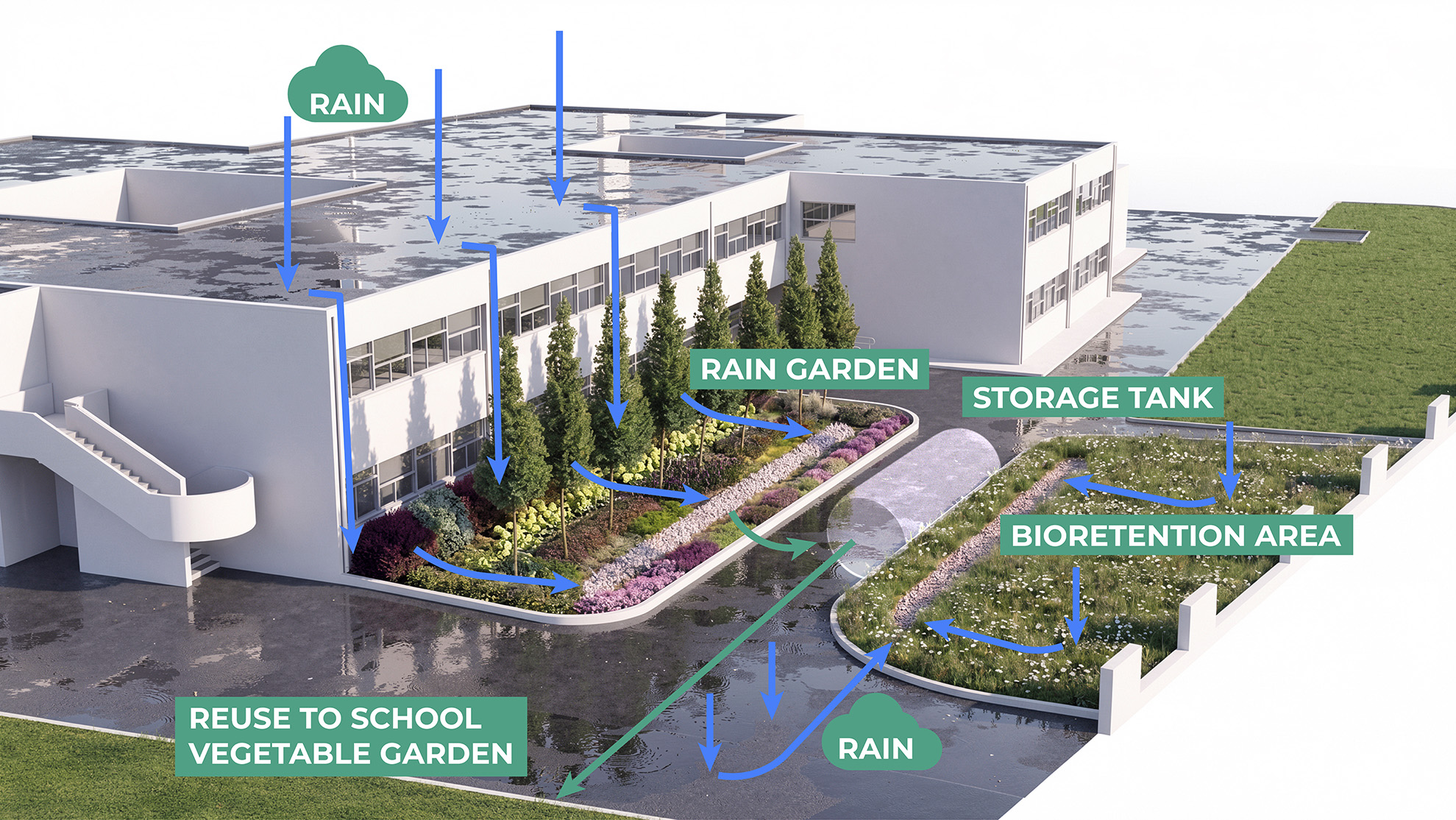
In Rome, the investment showcases an integrated Nature-based Solutions system for sustainable urban water management. De-paving of the schoolyard made way for a rain garden and bioretention area, working together to capture, treat and store rainwater, cutting potable water demand for irrigation of the school’s vegetable garden and green areas. At its core, the system collects and treats rainwater on-site in a dedicated storage tank, turning runoff into a safe, local water resource for reuse within the school grounds. The green infrastructure also cools the microclimate, boosts biodiversity, and creates a more liveable, climate-resilient school courtyard. Watch the video.
START PARK IMPLEMENTATION

Following the Start Park methodology, in Rome, a facilitated participatory design of a public garden close to a local school courtyard was carried out by local facilitators trained and guided by the URWAN team. Through facilitated events involving students and local residents, the process led to a shared masterplan for the space, complemented by a technical-economic pre-feasibility study developed with the support of technical partners. Discover more in the Start Park activity portfolio.
Sarajevo
DIGITAL TWIN

For Sarajevo was developed the Digital Twin of the selected pilot area through the integration of spatial, environmental, and infrastructure data.
The resulting model supports resilience assessment against climate change and enables the simulation of different adaptation scenarios, allowing decision makers to evaluate the effectiveness of alternative interventions before implementation.
As for the other pilot cities, a dedicated Web Viewer was developed to provide interactive access to the Digital Twin, allowing users to inspect the urban model, analyse resilience indicators, and compare planning scenarios. Watch the video.
START PARK IMPLEMENTATION
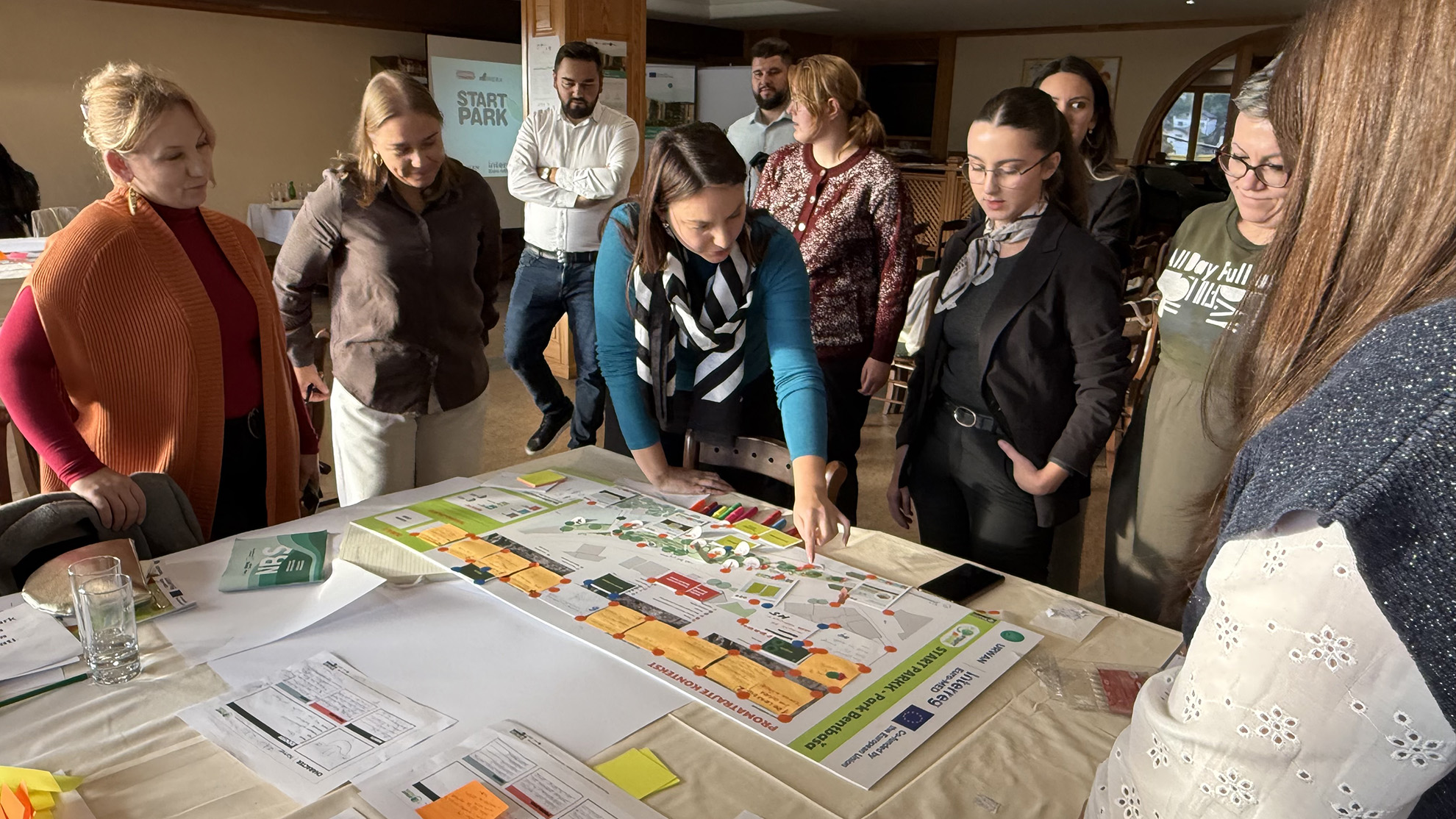
Following the Start Park methodology, in Sarajevo, a facilitated participatory design of a public green space along the riverbank was carried out by local facilitators trained and guided by the URWAN team. Through facilitated events involving 248 participants, the process led to a shared masterplan for the space, complemented by a technical-economic pre-feasibility study developed with the support of technical partners. Discover more in the Start Park activity portfolio.
Transfer Phase: 7 New Receiver Municipalities
Explore the 7 new Transfer Phase municipalities:
Since July 2026, URWAN is transferring the Enabler Pack — the Start Park Methodology, the URWAN Checklist and the training materials validated in the pilot phase – to 7 new municipalities across the Mediterranean. Guided by the new project partners, each receiver territory will implement its own Start Park co-design process and develop a territory-specific NbS Roadmap.
Avellino (Italy)
START PARK IMPLEMENTATION — TRANSFER PHASE
Led by ANCI Lazio, Avellino is the first of URWAN’s full receiver municipalities. Building on the territory analysis conducted in the preparatory phase, a facilitated participatory design process will engage local stakeholders in co-designing a climate-resilient public space, applying the Start Park Methodology validated during the pilot phase in Rome. The process will conclude with a territory-specific masterplan and an NbS Roadmap outlining short- and long-term priorities for the municipality.
Alzira (Spain)
START PARK IMPLEMENTATION — TRANSFER PHASE
Guided by MUSOL Foundation, Alzira will implement the Start Park Methodology to co-design a green, climate-resilient public space with the involvement of local municipal departments, technical staff and community actors. The URWAN Enabler Pack – the Catalogue, Checklist and Training Kits – will guide the process from territory analysis through to a final masterplan and NbS Roadmap.
Durrës (Albania)
START PARK IMPLEMENTATION — TRANSFER PHASE
Supported by the Regional Centre for Development and Cooperation (RCDC), Durrës will carry out a participatory co-design process to identify and plan Nature-based Solutions addressing local climate challenges. As a new project partner, RCDC will also act as a local multiplier, supporting dissemination and capacity building beyond the URWAN partnership.
Sesimbra, Palmela and Setúbal (Portugal)
START PARK IMPLEMENTATION — TRANSFER PHASE
Coordinated by the Energy and Environment Agency of Arrábida (ENA), this territory brings together three municipalities in a shared Start Park co-design process. Drawing on the Enabler Pack and lessons learnt from the pilot phase, the process will result in a territory-specific masterplan and Roadmap for climate-resilient, water-wise urban regeneration.
Patras / Western Greece
START PARK IMPLEMENTATION — TRANSFER PHASE
Led by the University of Patras – Department of Civil Engineering, this receiver territory has a distinctive feature: the University is opening its own campus as the implementation site, involving students and academic departments across disciplines in the co-design process. This strengthens long-term capacity building and dissemination well beyond the lifespan of the project.