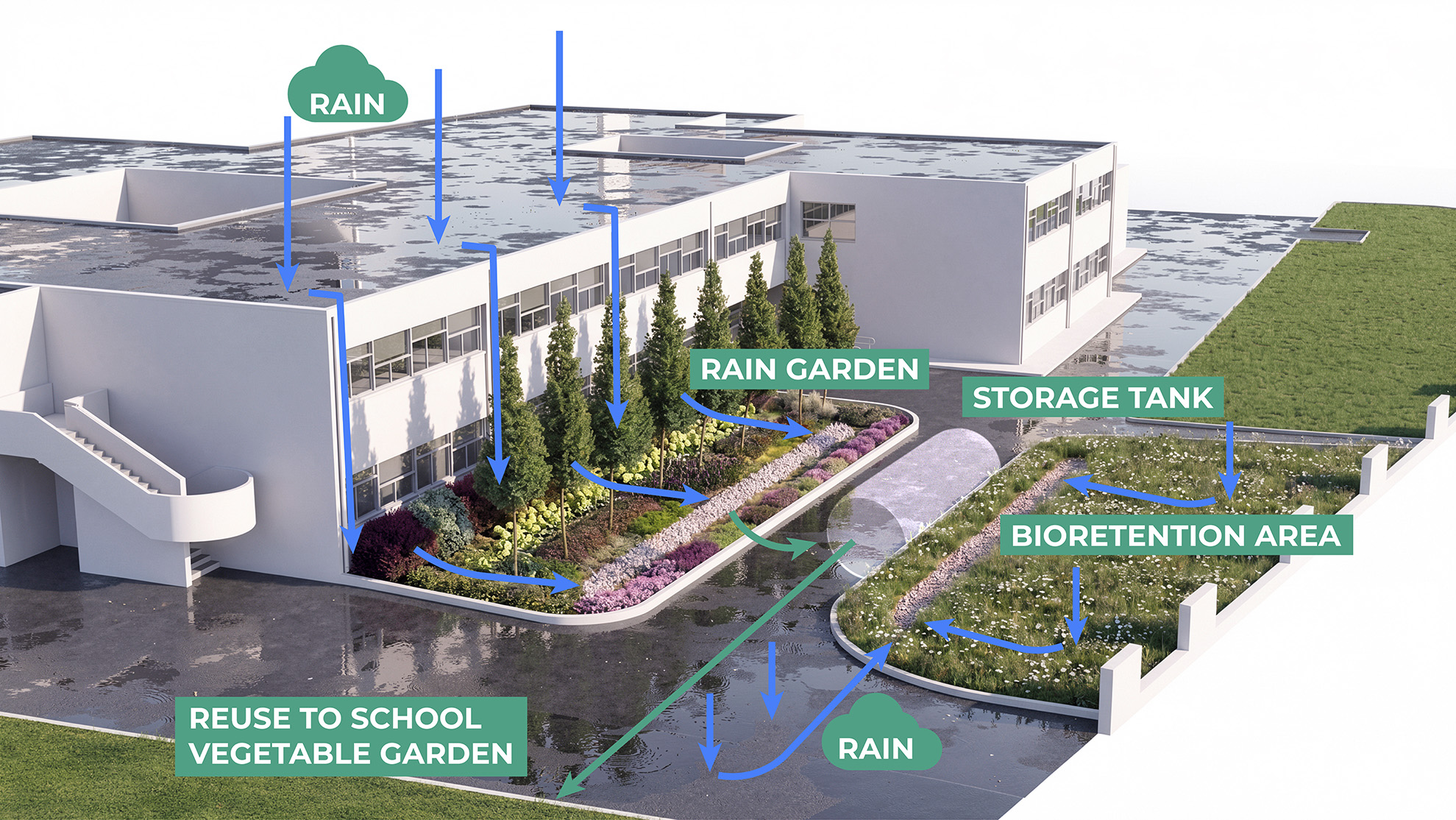

Guidelines, a solutions catalogue, a training programme and pilot results from the project’s first phase are now available on the URWAN website, as the partnership – joined by new territories in Albania, Greece, Portugal and Spain – begins transferring its tools to new Mediterranean cities.
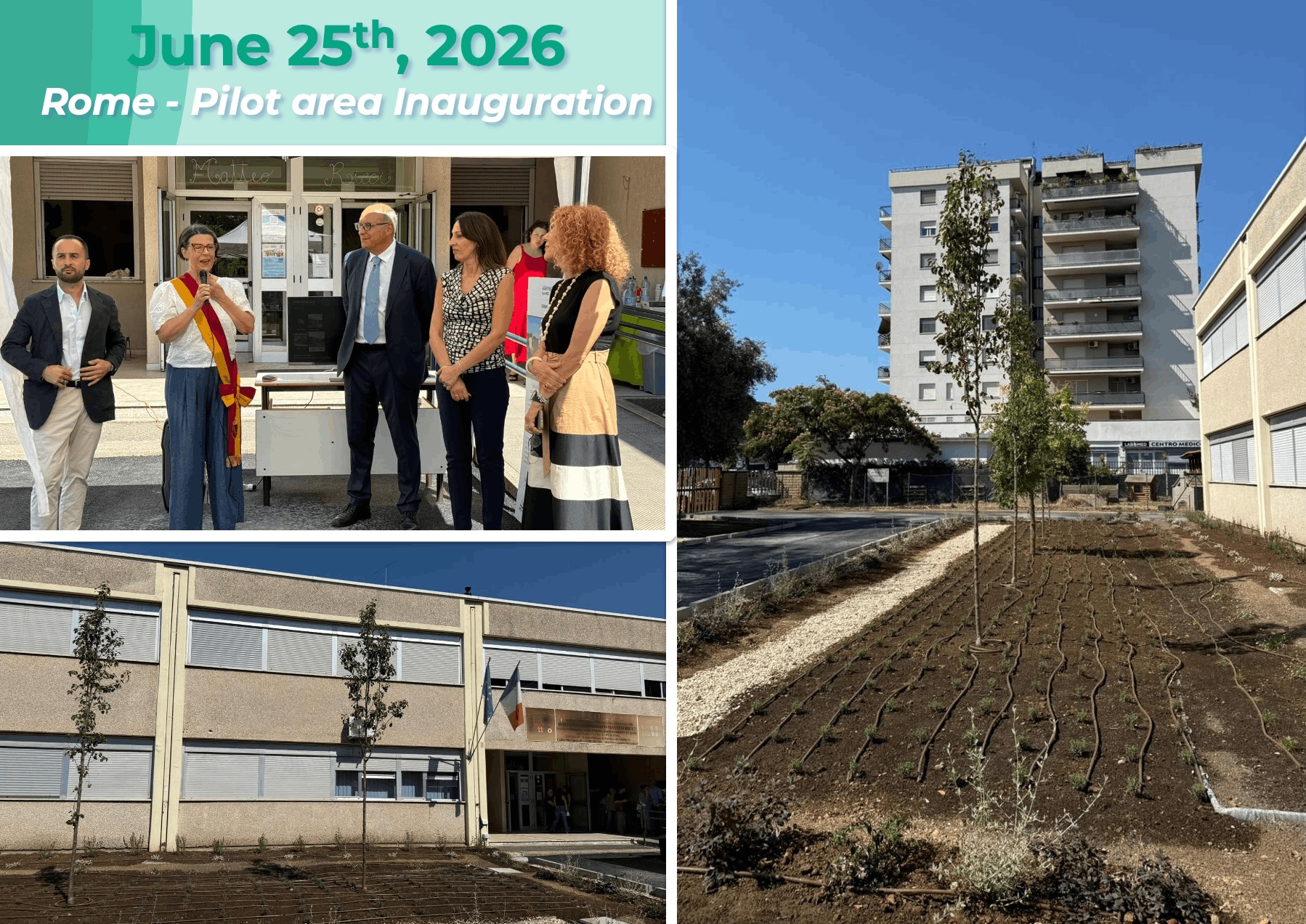
URWAN inauguration in Rome:
The Interreg Euro-MED project URWAN – Urban Regenerative Water Avant-garde(N) has published its complete set of final products on the project website, offering municipalities across the Mediterranean a ready-to-use package of tools for planning and implementing Nature-based Solutions (NbS) that make cities more resilient to drought, flooding and water scarcity. The release comes as the project enters its Transfer Phase, extending its approach to new Mediterranean territories.
The Mediterranean region is increasingly exposed to severe droughts and water scarcity, and its urban areas are highly vulnerable to the effects of climate change. In response, decision-makers often plan greening investments without a long-term strategy for resource availability, impacts and opportunities. URWAN was designed to close this gap, demonstrating how multifunctional NbS, developed through community-driven processes, can bring together decision-makers, technicians and citizens to create living spaces that are resilient, beautiful and socially inclusive.
Co-financed with €2.2 million in Interreg funds, URWAN’s first phase brought together eight partners from Italy, Spain, Portugal, Slovenia, Malta and Bosnia and Herzegovina — ANCI Lazio, IRIDRA, SVIMED, Make it Better, MedCities, the Scientific Research Centre Bistra Ptuj, the Energy and Water Agency of Malta and the City of Sarajevo — supported by eleven associated partners, to influence decision-making and multiply the impact of public investment in green-blue infrastructure.
Two complementary pathways, five pilot cities
Local authorities followed two complementary approaches. Through the Investment pathway, integrated NbS systems combining constructed wetlands, rain gardens, bioretention areas and green roofs were designed to capture, treat and reuse rainwater and greywater: the interventions were fully realised in Cuba (Portugal) and Rome (Italy), while a design for two beach facilities in Larnaka (Cyprus) was completed and remains available as a replicable model. Through the Kassandra pathway, Digital Twins integrating GIS, environmental and infrastructure data were built for Ferla (Italy), Ptuj (Slovenia) and Sarajevo (Bosnia and Herzegovina), each connected to a resilience engine and a dedicated web viewer that lets local authorities simulate and compare climate adaptation scenarios.
In parallel, the Start Park methodology guided facilitated, community-driven co-design processes in Cuba, Ferla, Ptuj, Rome and Sarajevo. Across the pilot territories, the project contributed to six urban master plans incorporating NbS, trained more than 225 people and involved over 900 citizens and stakeholders through participatory processes.
A full Enabler Pack, now free to use
To make these results replicable beyond the pilot cities, URWAN has packaged its know-how into an Enabler Pack made up of four tools, all freely available on the website: the URWAN Training Programme; the URWAN NbS Catalogue, featuring 20 water-smart and water-sensitive solutions; the Start Park Guidelines, a replicable model for co-designing green-blue infrastructure with local communities; and the URWAN Checklist, aligned with the IUCN Global Standard for Nature-based Solutions.
The Catalogue and Checklist are being progressively released in the partnership’s languages, alongside dossiers on each pilot city and a growing library of videos on the project’s YouTube channel.
URWAN enters its Transfer Phase
On 21 July 2026, URWAN officially launched its Transfer Phase during an online kick-off meeting, opening a new chapter dedicated to sharing and replicating the project’s Nature-based Solutions with additional Mediterranean municipalities. Coordinated by ANCI Lazio, the Transfer Phase welcomes four new partners into the URWAN consortium: the Regional Centre for Development and Cooperation (RCDC, Albania), the MUSOL Foundation (Spain), the University of Patras (Greece) and the Energy and Environment Agency of Arrábida (ENA, Portugal).
In the coming months, the enlarged partnership will identify and engage new “receiver” territories, adapt the Enabler Pack for transfer activities, launch the URWAN School to strengthen local capacities, and support new participatory co-design processes and territory-specific roadmaps. First transfer results are expected by the end of 2027. The partnership will also take part in the Interreg Euro-MED mid-term event in Marseille in November 2026 and will meet again in person in Sicily in the coming months.
“These tools were built to be used well beyond URWAN,” said Andrea Vignoli, URWAN project coordinator at ANCI Lazio. “Our ambition is for cities to take these solutions, adapt them to their own needs and use them as part of their everyday approach to climate adaptation. In this way, the results of URWAN can continue to generate value well beyond the project itself.”